
Automatic lubrication system: advantages and differences from traditional methods
10 December 2025
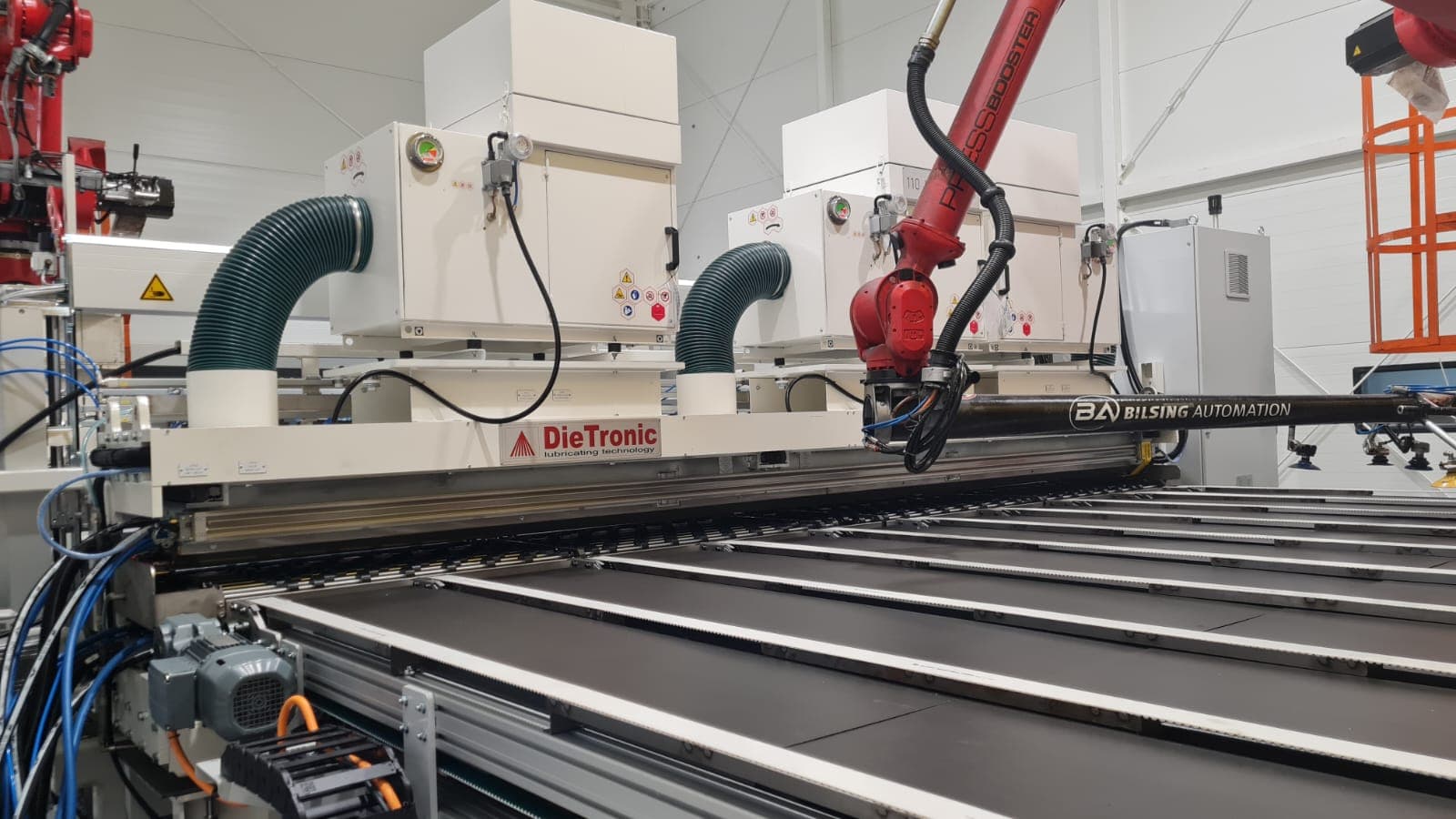
Lubricant management affects every phase of sheet metal processing. Every operation, from blanking to deep drawing, requires consistent conditions to sustain part quality and production continuity. In modern facilities, the demand for solutions capable of delivering increasingly accurate lubrication control continues to grow, because the behaviour of the line changes depending on the material, thickness and profile of the component being produced. An automatic lubrication system fits into this scenario as a tool that brings order, consistency and repeatability where variability can generate inefficiencies.
Why an automatic lubrication system is needed today
Many lines still rely on impregnated rollers, manual sprays or improvised applicators to deposit lubricant on sheet metal. These tools suffer from a common issue: variability. The amount of fluid changes depending on the pressure applied by the operator, the condition of the roller or the distance of the spray. Each shift produces different results, making it difficult to maintain stable cycle conditions, especially when processing sensitive materials or complex profiles.
The most frequent issues linked to traditional lubrication include:
- variations in the amount of fluid between operators and shifts
- insufficient coverage in critical areas
- unstable friction with the risk of micro-seizing
- fluctuations in line speed with a higher risk of scrap
- frequent interventions in exposed operating areas
- poor repeatability of results in the medium and long term
These factors influence process stability and increase operator exposure – two elements that should drive companies toward more controllable and predictable application solutions.
Precise and repeatable lubrication
An automatic lubrication system provides a level of control impossible to achieve with manual devices. The amount of fluid is dispensed through dedicated regulation units, with digitally set parameters. Each pulse maintains the same volume and pressure. This creates a uniform lubricant film both during start-up and in the fastest cycles, a condition that helps the machine operate with predictable behaviour.
Precision in dosing also reduces friction fluctuations. The sheet metal moves more smoothly across dies and guides, with direct effects on motion regularity. Vibrations decrease and the press maintains a more stable behaviour, especially during transitions between one phase and the next. Tooling also benefits from this consistency: constant lubrication preserves cutting efficiency and limits the risk of localized wear.
Repeatability is the clearest advantage. Once parameters are set, the system reproduces the same application pattern every time, regardless of the shift or operator. This helps the line maintain a stable standard even when workload increases or production requires frequent format changes. Automation thus becomes an element that supports process stability, reducing micro-variations that often translate into productivity losses and quality drops.
Reduced consumption and optimized lubricant management
An automatic lubrication system introduces a much more organized and measurable fluid management process compared to traditional solutions. The reason lies in micro-dosing: each application uses only the amount strictly necessary to cover the sheet surface without excess. With manual methods, waste is frequent because operators tend to over-apply to avoid dry zones. Over time, this increases both costs and the volume of material handled along the line.
Consumption control enables more accurate planning. Companies can better predict when to replenish the lubricant, avoiding unnecessary stock or sudden shortages. Uniform application also reduces the risk of defects caused by excessive fluid, such as unexpected slippage or adhesion issues in subsequent processes (painting, welding, assembly).
Another positive effect concerns the reduction of rework. Excess lubricant can create stains, residues or variations in sliding behaviour, with visible consequences on the final result. Controlled fluid use improves cycle regularity and leads to a cleaner, more organized line, contributing to an operating environment that is easier to monitor.
Choosing the right automatic lubrication system
The choice of the most suitable automatic system depends on the type of processing, line speed and the level of control required during application. Facilities that handle repetitive, high-volume processes benefit from solutions capable of maintaining constant precision without frequent interventions. Dietronic offers a range of technologies designed to meet these needs, with features tailored to the most common metal stamping and forming scenarios.
Promax is ideal for lines requiring a complete and controlled application across the entire sheet surface. The system digitally manages quantity and flow rate, providing precise settings that support stable behaviour even as production increases. Its modular design allows integration of functions that follow line speed, keeping dosing consistent throughout the cycle.
Sagoma is used when targeted application is needed. The system distributes lubricant only in required areas, following the profile of the part. This solution supports facilities working with components of complex shapes and provides selective control that helps avoid waste.
For more details on these units, visit our website. If you would like specific information or a quotation, contact us at sales@dietronic.eu