
Sustainable lubrication system: less oil, higher quality
5 February 2026
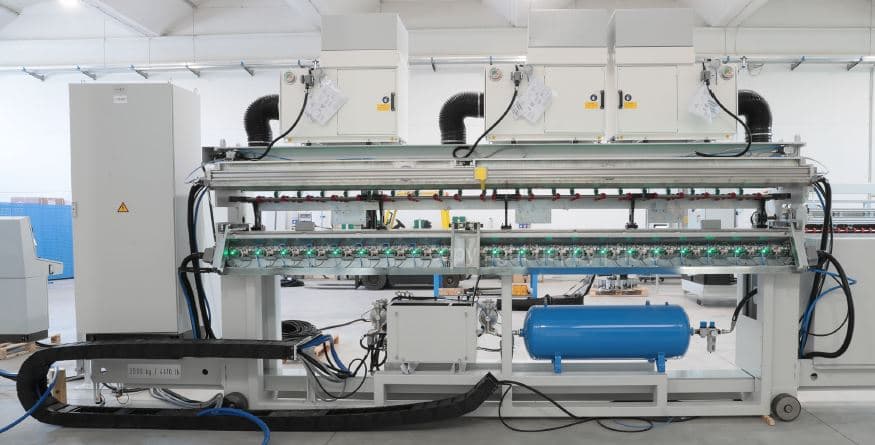
In the metalworking industry, the challenge is not only to achieve high-quality products, but to do so in an environmentally responsible way. This is where the concept of a sustainable lubrication system comes into play – a technology that combines production efficiency with reduced environmental impact. Unlike traditional methods, which often rely on excessive amounts of oil and generate waste, these systems allow for precise and targeted lubricant dosing, cutting consumption and minimizing residues.
What is a sustainable lubrication system and why it pays off
A sustainable lubrication system originates from the need to reduce waste and inefficiencies typical of traditional processes. In conventional systems, lubricant is applied uniformly and in large quantities, without distinguishing between areas that actually benefit from lubrication and those where it is unnecessary. This approach leads to high consumption, difficult-to-manage residues, and poorly controlled operating conditions.
A sustainable approach focuses on precision instead: the lubricant is dosed according to the contact point, the material, and the processing phase, with accurate control over the amount delivered. The benefits of this approach can be summarized as follows:
- Reduced consumption: targeted dosing can cut lubricant use by more than 80%, with direct effects on supply costs and industrial waste management.
- Improved quality: controlled lubrication supports more stable and repeatable processes, limiting surface defects and ensuring higher-quality finishes.
- Safer working environment: less dispersed oil means cleaner surfaces, reduced oil mist, and safer operating conditions.
- Tool preservation: reduced friction and premature wear of dies improves process continuity and extends equipment service life.
This approach balances operational efficiency with attention to environmental impact, turning lubrication into a strategic element of the industrial process that supports quality goals, cost control, and environmental responsibility.
Environmental and industrial impacts of sustainable lubrication
Lubricant management has a significant influence on the environmental impact of metalworking processes. Excessive oil use generates residues that require specific treatments, leading to high costs and considerable environmental consequences. A sustainable lubrication system addresses these issues at the source by changing how lubricant is applied and managed along the production line.
Lower consumption leads to a proportional reduction in waste to be disposed of and in potentially polluting substances. Fewer oily residues on machines simplify routine maintenance operations and reduce downtime, with positive effects on production continuity. From an organizational perspective, adopting sustainable systems supports companies in meeting environmental regulations and pursuing strategies aimed at reducing their ecological footprint.
Process quality and control
Process quality largely depends on controlling friction between the tool and the material. A sustainable lubrication system acts directly on this balance, providing more uniform and controlled lubricant distribution compared to traditional methods. When oil is applied in a targeted manner, contact surfaces operate under more stable conditions, reducing mechanical and thermal stress. This leads to more consistent surface finishes and limits defects such as drag marks, micro-scratches, or residue build-up.
Controlled lubrication also helps preserve dies and tools by reducing wear and maintaining original geometric characteristics for longer periods. Greater process stability results in more predictable operations, with less variation from batch to batch. Working with reduced lubricant quantities improves overall process control and decreases rework, positively affecting production continuity.
Practical application of a sustainable lubrication system with Dietronic solutions
The practical adoption of a sustainable lubrication system involves selecting solutions that integrate control, precision, and reduced consumption within the production line.
In this context, Dietronic has developed the Combi system, designed to optimize cleaning and lubrication phases before material processing. The system combines motorized brushes, residue extraction, and controlled lubricant spraying, creating a continuous and adjustable process based on production requirements. Oil is applied only to areas directly involved in deformation, with precise control over both quantity and delivery frequency. This results in lubricant consumption reductions exceeding 80%, while maintaining stable and repeatable operating conditions.
Integrating Combi into existing lines supports more efficient process management, with fewer surface residues and reduced cleaning operations. Precise lubrication control also enhances processing quality, limits tool wear, and improves production continuity. The solution developed by Dietronic demonstrates how a sustainable lubrication system can be applied in a concrete and measurable way, transforming a traditionally critical phase into an element of overall process optimization.
Adopting technologies such as Combi makes it possible to combine production efficiency, cost control, and environmental awareness, offering an operational model aligned with the needs of modern industry. For more product details, visit our website. For specific requests, please contact us at sales@dietronic.eu