
Anticorrosion Protection for Metal Tubes and Profiles
27 May 2026
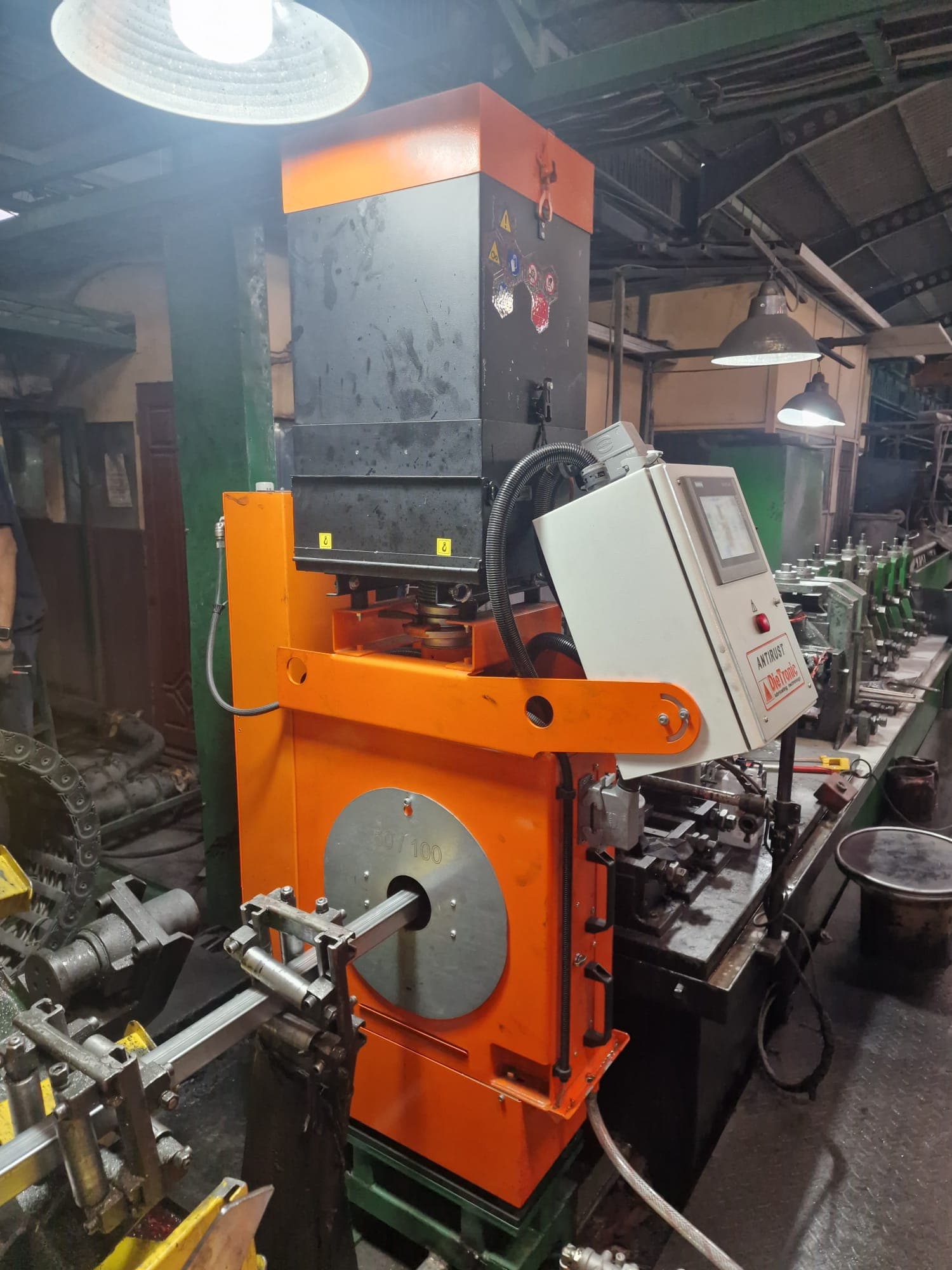
Surface corrosion is one of the most underestimated issues in the production lines of tubes, wires, and metal profiles. Often treated as a minor inconvenience, it actually turns into one of the main sources of non-conformities, returns, and margin loss. The water used to cool the line leaves a damp film on the metal surface that, if not removed and treated promptly, triggers oxidation within hours. Applying a rust inhibitor spray at the right stage of the process, with the right technology, radically changes end-of-shift and end-of-month results.
Surface Corrosion: What It Really Costs
A production manager measures corrosion in terms of customer complaints, scrap rates within batches, and hours spent handling non-conformities. These figures directly affect operating margins and, in the worst cases, customer relationships.
The issue often starts with the cooling water that follows the tube along the production line. If the semi-finished product reaches the protection stage while still wet, the anticorrosive oil does not adhere evenly: uncovered areas remain and become oxidation hotspots during storage or transport. When the customer opens the shipment and finds rust, the economic damage goes far beyond the cost of the component itself: return procedures, additional inspections, and, in some sectors, contractual penalties come into play.
Traditional spraying systems often worsen the situation by compensating for poor efficiency with higher product consumption. More oil does not mean better protection: it means greasy surfaces, oil mist in the work environment, slippery floors, and operators exposed to volatile substances throughout the shift. Protective product costs rise, quality does not improve, and safety risks increase.
For companies managing high-volume production lines, the impact translates into a clear indicator: the ratio between RPO (rust preventive oil) consumption and the percentage of compliant batches at delivery. When that ratio worsens, the issue lies not in the protective product itself, but in the way it is applied.
How an Integrated Rust Inhibitor Spray System Works
An effective anticorrosion protection system does not add a separate phase to the process: it integrates into the existing line and operates automatically, without requiring manual intervention whenever speed or product formats change.
In this context, Dietronic’s Antirust system applies rust preventive oil (RPO) accurately and evenly across the entire tube surface, automatically calibrating the amount delivered according to line speed. When the line accelerates, the system increases delivery. When the line slows down, it reduces the flow. Coverage remains uniform in both cases, without consumption peaks or uncovered areas.
The range covers diameters from 2 mm to 406 mm and works with tubes, wires, profiles, and bars of different cross-sections: the solution adapts to the product, not the other way around. From an environmental and safety perspective, the absence of oil mist in the work environment is one of the benefits operators appreciate most: reduced exposure to vapors, fewer contaminated surfaces, and objectively better working conditions.
Data collected from real installations confirms the operational impact. Ameristar, a steel fencing manufacturer, recorded a 90% reduction in oxidation-related complaints after the first installation of the Antirust system, with a return on investment in less than one year. United Tube reduced overall RPO consumption by 60% while also eliminating fumes that exposed operators to uncomfortable working conditions. With more than 1,000 machines installed worldwide, the system has proven effective across a wide variety of production environments.
The Complete Cycle of a Rust Inhibitor Spray Treatment
Anticorrosion protection does not depend solely on the quality of the rust inhibitor spray applied, but also on the preparation of the surface receiving it. An anticorrosive oil applied to a tube that is still wet or contaminated loses much of its effectiveness. For this reason, Dietronic designed a solution that treats the tube sequentially, with each phase preparing the surface for the next.
The cycle begins with coil cleaning: a lower roller with rotating brushes removes dirt particles and surface marks before the material enters the line, delivering direct benefits in terms of surface quality and tool wear reduction.
The following stages work sequentially on each produced unit:
- Washing: removes residues not intercepted during mechanical cleaning, using solvents and water-based products at controlled temperatures on tubes of any shape and size.
- Pneumatic drying: removes cooling water with compressed air before the tube reaches the RPO application area. Without this step, the anticorrosive oil is applied to a damp surface and protection inevitably becomes uneven.
- Rust inhibitor spray protection: the Antirust system delivers RPO consistently and proportionally to line speed. Coverage remains complete while consumption stays under control.
- MQL lubrication: two separate nozzles operate during the cutting phase. One cools the blade, while the second delivers pure oil in minimal quantities directly into the cutting zone, eliminating residual water and extending blade life.
Each sequence has a specific function and generates a measurable effect on the finished product. Anticorrosion protection therefore moves beyond being a routine operation and becomes an engineered process that can be monitored and optimized over time.
To learn more about the technical features of the Antirust system or evaluate the most suitable configuration for a production line, companies can visit the dedicated page or contact the Dietronic team directly at sales@dietronic.eu