
Reduction of Downtime: Why Lubrication Impacts Efficiency
26 November 2025
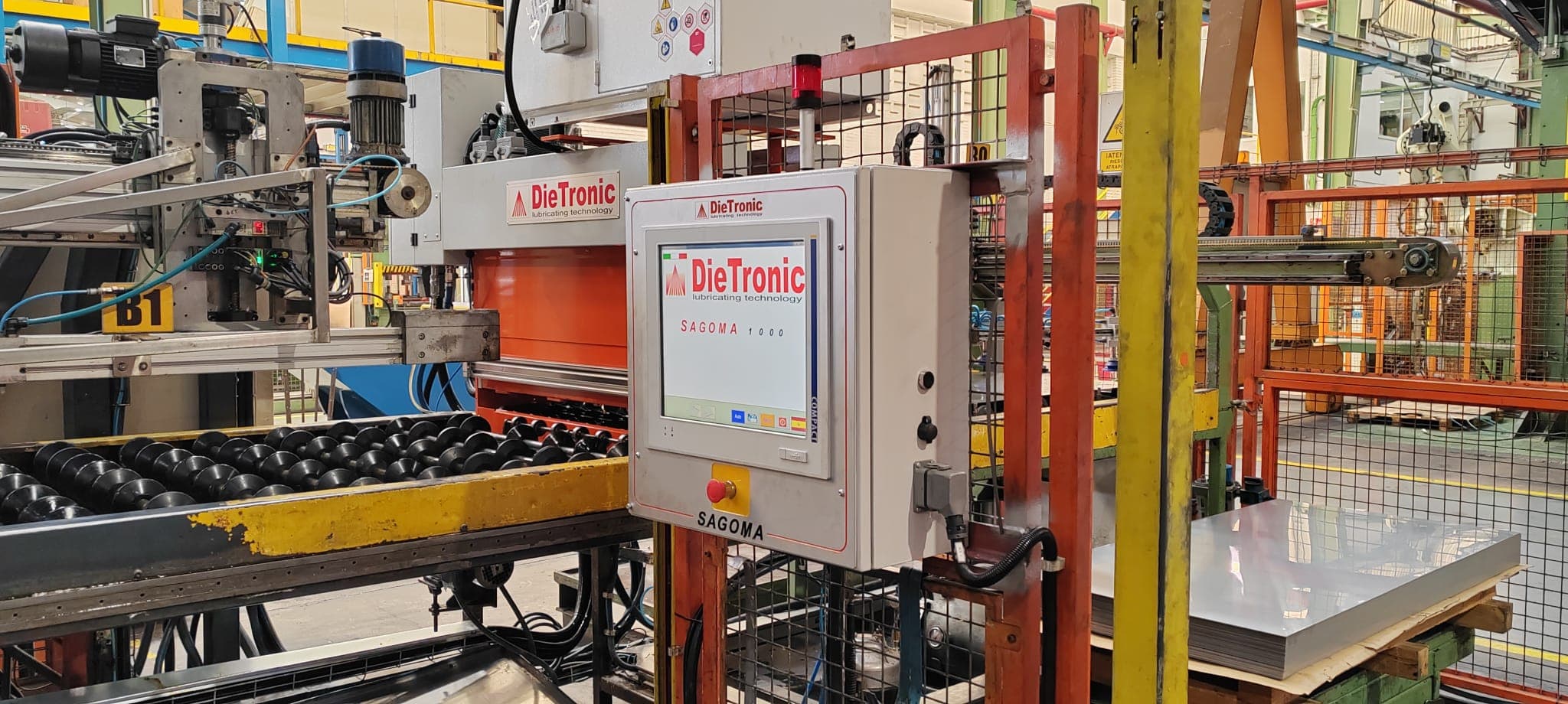
In every production plant, downtime affects the pace of the lines far more than what usually emerges from production reports. Even short interruptions can break the continuity of the cycle, create bottlenecks, and require corrective actions that slow down the entire chain. Every unexpected stop results in lost output, higher operating costs, and a less streamlined management of orders.
Among the variables that influence machine stability, lubrication plays a decisive role. When lubricant application is not constant or adequate, friction increases, tools wear out more quickly, and equipment becomes more prone to vibrations and irregularities. These conditions lead the line toward stoppages, both due to process anomalies and because manual intervention becomes necessary.
Reduction of downtime: lubrication as a key factor
The reduction of downtime requires accurate control over the conditions in which machines and tools operate. In forming and stamping processes, friction is one of the main elements that affect continuity and precision. When lubrication is insufficient or not applied evenly, issues such as overheating, local seizures, or increased vibration can occur. All these factors make the cycle less stable and increase the likelihood of micro-interruptions or unplanned stops.
Manual lubrication, still common in many plants, has clear limitations. The amount of lubricant applied can vary from one operator to another, as can the frequency of application. Even a slight delay can create non-optimal working conditions, leading to accelerated tool wear and a higher risk of jamming. This variability reduces process predictability and increases the chances of recurring malfunctions.
A frequently overlooked factor is the precision of the application point. Without a targeted distribution, part of the lubricant ends up on secondary areas, leaving critical zones less protected. Over time, this imbalance compromises cycle stability, requires more frequent maintenance, and makes the line more vulnerable to unexpected stops.
Operational continuity and fewer machine stops
Automatic lubrication offers a more stable and repeatable approach compared to traditional methods. Modern systems use electronic controls capable of precisely regulating quantity, pressure, and application frequency. This level of control creates constant conditions inside the production line, preventing fluctuations that make the process more vulnerable to micro-stoppages or unplanned interruptions.
Uniform lubricant distribution helps maintain a stable contact surface between tools and the material being processed. When the surface runs smoothly, the system operates with less strain, vibrations decrease, and process deviations are minimized. This reduces the likelihood of critical components overheating or deforming during the cycle – situations that often require sudden stops for inspections and corrective actions.
Another advantage concerns operational consistency: automatic application does not suffer delays, pauses, or variations linked to manual intervention. The line operates with the same quality from start-up to the scheduled stop, with a stability level that simplifies production management and helps maintain the expected workflow. The result is smoother production with fewer unexpected interruptions throughout the day.
Reducing downtime through intelligent lubrication management
Intelligent lubrication management helps create a more predictable and linear process. Automatic systems support this approach by keeping consumption, impulse frequency, and application parameters under control. This allows supervisors to detect deviations more easily and act before they develop into more serious issues.
Precise lubricant monitoring also improves routine maintenance. Tools, dies, and wear-prone surfaces operate under more consistent conditions and tend to maintain their performance for longer. Product quality remains stable, avoiding scraps and reworks that often require intermediate stops for parameter checks.
The ability to control the exact amount of fluid used reduces waste and optimizes inventory. More efficient consumption management frees up operational resources and simplifies the organization of shop-floor activities, with positive effects on production scheduling. For high-productivity lines, this results in a smoother cycle, fewer corrective interventions, and better planning capabilities.
Adopting automatic systems keeps the process as close as possible to optimal conditions. This way, the line runs continuously, downtime decreases, and the entire plant operates with a higher level of reliability.