
How to Optimize Oil Spraying in Industrial Processes
4 August 2025
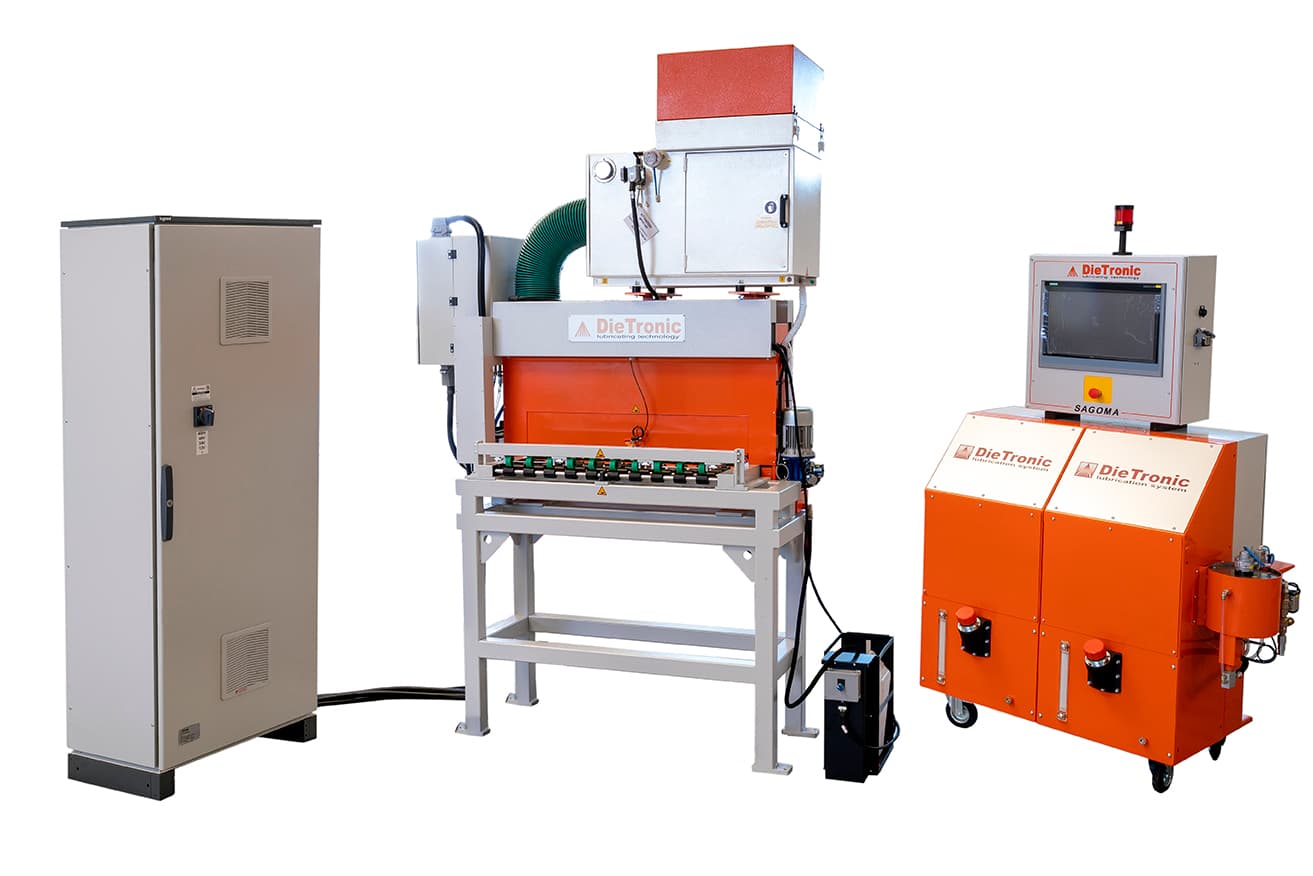
In a production line, every detail matters: from the configuration of the press to the choice of tools and the management of consumables. Among these, lubrication is often underestimated, yet it has a major impact on the entire process. Today, the challenge is no longer just to “lubricate,” but to do so with precision using the right amount, in the right way, at the right time.
Oil spraying has evolved from a simple ancillary task into a strategic component of the production cycle, directly affecting the quality of the finished product, plant efficiency, and the overall sustainability of the operation.
Why Oil Spraying Is Crucial in Production Processes
In the metal stamping and forming sector, oil spraying plays a key role in ensuring production efficiency, component quality, and equipment longevity. Proper lubrication reduces friction between the tool and the sheet, limits die wear, and prevents defects such as galling, uncontrolled bending, or material breakage. However, not all spraying techniques are created equal. Poor lubrication management can lead to oil waste, machine downtime, and high maintenance costs.
Older technologies, such as mist or full-flow systems are often imprecise and difficult to control, with negative consequences for both productivity and the working environment. In contrast, modern high-precision oil spraying systems, like those developed by Dietronic, offer effective, customizable solutions tailored to the needs of high-performance production lines.
Investing in advanced lubrication systems is not just a technical choice, but a strategic one that contributes to long-term business competitiveness.
Best Practices for Efficient and Sustainable Lubrication
To achieve truly effective oil spraying, it’s essential to adopt well-structured operational procedures that ensure process continuity, equipment safety and long-term sustainability. One of the key recommendations is to regularly calibrate the lubrication system based on production changes (e.g., new materials, line speed, geometries). Excessive lubrication may contaminate the parts or increase cleaning costs, while insufficient lubrication can compromise stamping quality.
Another critical point is preventive maintenance of the spraying system: checking filters, nozzles, and valves ensures a consistent spray and proper oil distribution. Dietronic systems are designed to minimize these maintenance needs thanks to their modular construction and wear-resistant materials.
Finally, using systems that allow for “minimal” and localized lubrication helps drastically reduce oil consumption and airborne emissions, making it easier to comply with environmental regulations.
Oil Spraying Systems: How to Choose the Right Technology
Choosing the right oil spraying system for your plant means evaluating several key parameters:
- The type of metal to be processed
- The speed of the line
- The shape and geometry of the part
- The type of oil used
- The required level of precision
A high-quality lubrication system must ensure uniform coverage, accurate volume control, and minimal waste, even on complex or perforated sheets with irregular shapes.
Among the top-performing solutions on the market today is Dietronic’s Sagoma unit, designed for targeted lubrication of sheets with specific profiles. Thanks to an electronic spraying system with individually controlled valves, it allows precise oil dosing on each area of the sheet, even during high-speed processing. The system also enables you to store multiple lubrication “recipes” based on part type, reducing setup time between batches.
In addition to the Sagoma unit (which you can view here), Dietronic offers a full range of automatic spraying systems, featuring fixed or mobile heads, suitable for both small-scale installations and complex production lines.
For more information or a customized quote, feel free to contact us at: sales@dietronic.eu