
Lubrication System Maintenance: A Guide to Prevent Industrial Failures
22 April 2026
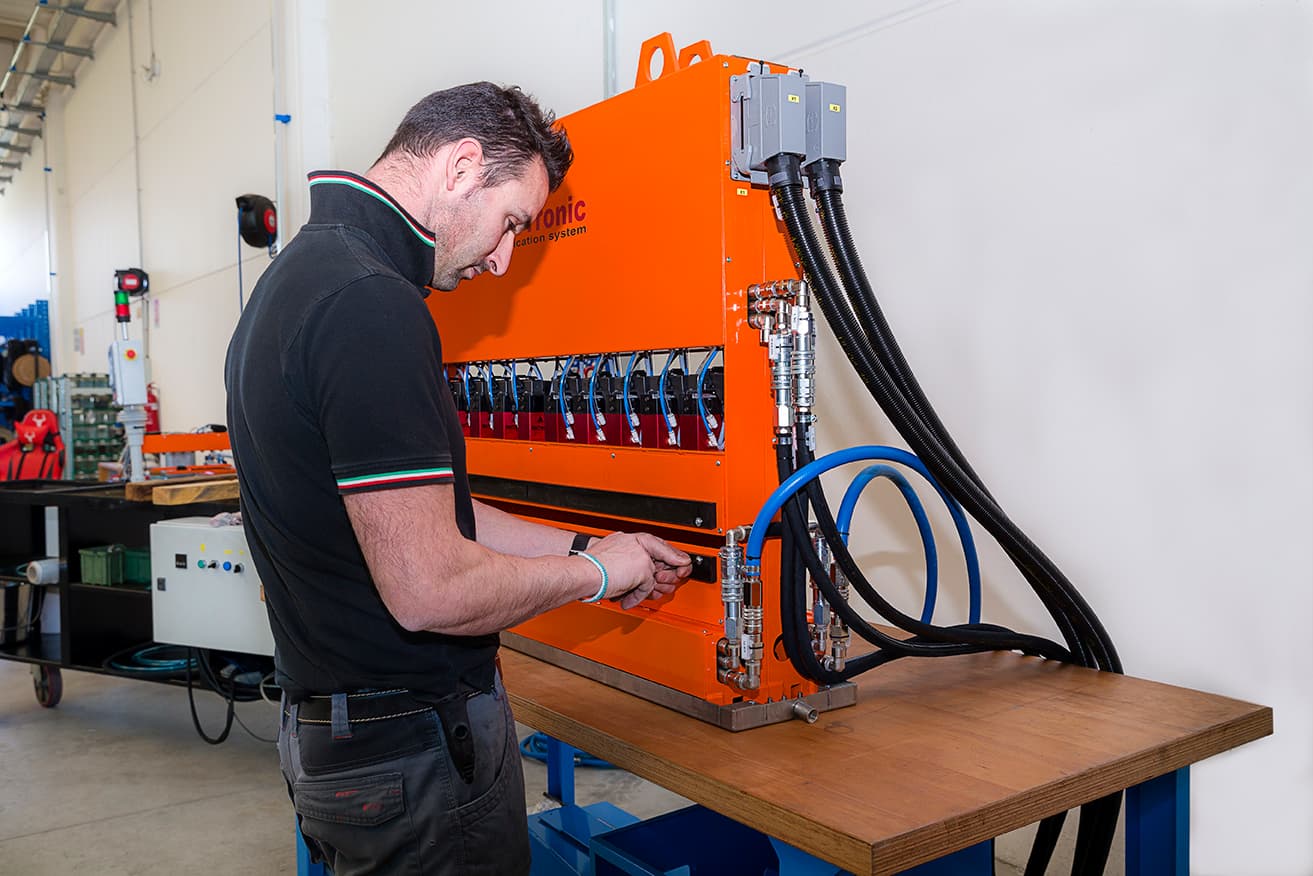
Lubrication system maintenance is not a secondary task to be scheduled only when time allows: it directly affects component lifespan, process quality, and production continuity. In industrial production lines, failures rarely occur without warning. In most cases, they are preceded by a chain of overlooked events – and in a significant number of situations, that chain begins with a poorly maintained lubrication system.
Why Lubrication System Maintenance Prevents Failures and Downtime
Wear in industrial components follows predictable patterns. Friction between metal surfaces, in the absence of an adequate lubricating film, generates heat, abrasive microparticles, and progressive deformation that compromise component tolerances. As long as the process continues, these signals often remain unnoticed until failure occurs.
Lubrication serves to keep surfaces separated, dissipate operating heat, and protect metals from corrosion. When the lubricant degrades, becomes contaminated, or is lost due to an undetected leak, these functions gradually decline. The component continues to operate, but under increasingly degraded conditions. The result, almost invariably, is unplanned downtime – with all the consequences in terms of halted production, spare parts costs, and recovery time.
Acting preventively on this mechanism reduces the likelihood that lubrication conditions drop below critical thresholds. By scheduling periodic checks, fluid condition assessments, and circuit inspections, anomalies can be detected while still manageable, before turning into actual failures. The impact on operating costs is measurable: fewer component replacements, fewer downtime hours, and fewer reworks caused by degraded process quality.
Operational Best Practices for Industrial Lubrication System Maintenance
A clear procedure forms the foundation of any effective maintenance plan. Without defined intervals and precise control criteria, even the most attentive technician ends up working reactively rather than preventively. These are the key areas for building a structured approach.
- Relubrication intervals: each component has an optimal window, determined by application type, operating speed, temperature, and load. Exceeding that window – even by a single shift – exposes the component to deteriorated working conditions. Defining these intervals rigorously, combining manufacturer guidelines with field experience, forms the basis of structured maintenance. When operating conditions vary frequently, it may be useful to adjust scheduling based on real parameters rather than fixed intervals.
- Selecting the correct lubricant: incorrect viscosity, unsuitable additives, or a product incompatible with operating temperatures can cause more damage than the absence of lubrication. In stamping, deep drawing, or metalworking applications, fluid specifications must align with process characteristics, the material being processed, and plant environmental conditions. Choosing the wrong product for convenience or to reduce inventory variety often leads to medium-term consequences.
- Condition monitoring: periodic fluid analysis – including simple visual checks of color, viscosity, and particulate presence – helps determine when the lubricant has lost effectiveness, regardless of elapsed time. In more advanced contexts, integrated sensors enable continuous monitoring of temperature, pressure, and flow, detecting deviations before they affect the process.
- Circuit cleaning: deposits, oxides, and solid contaminants accumulate in lines over time. If not removed, they become a source of abrasive wear – a paradox that turns a protective system into a damage vector. Periodic circuit cleaning, calibrated according to fluid type and operating conditions, should be planned as a dedicated activity within the maintenance program.
- Leak detection: even a seemingly negligible leak, if prolonged, alters operating pressures, depletes the circuit, and may introduce external contaminants into the system. Regular visual inspection of fittings, seals, and distribution lines is a low-cost activity that prevents consequences disproportionate to the initial issue.
Building a plan that integrates all these activities – with defined frequencies, assigned responsibilities, and recorded interventions – turns maintenance from an unpredictable variable into a concrete lever for optimizing industrial systems.
Lubrication and Product Quality: an Often Underestimated Link
When discussing industrial preventive maintenance, attention typically focuses on protecting mechanical components. There is, however, a second effect that receives less attention but carries equal weight: the condition of the lubrication system directly influences the quality of the finished part.
Lubricants do more than protect tools – they come into direct contact with the material and influence the surface outcome of the final product. A degraded fluid, applied in incorrect quantities or distributed unevenly, can lead to scratches, surface marks, dimensional variations, and defects that may not appear during processing but emerge later during inspection – or worse, at the customer’s site.
The correlation between recurring quality issues and lubrication system conditions is often overlooked during root cause analysis. Unexplained scrap, process variations that resist clear identification, surface defects that appear and disappear without an evident pattern: in many cases, investigating the lubrication circuit reveals issues that no other parameter had highlighted. Integrating lubrication system condition checks into quality control routines – not just maintenance – helps close a monitoring loop that would otherwise remain incomplete.