
Lubrication Cost Savings: The Role of Automation
1 April 2026
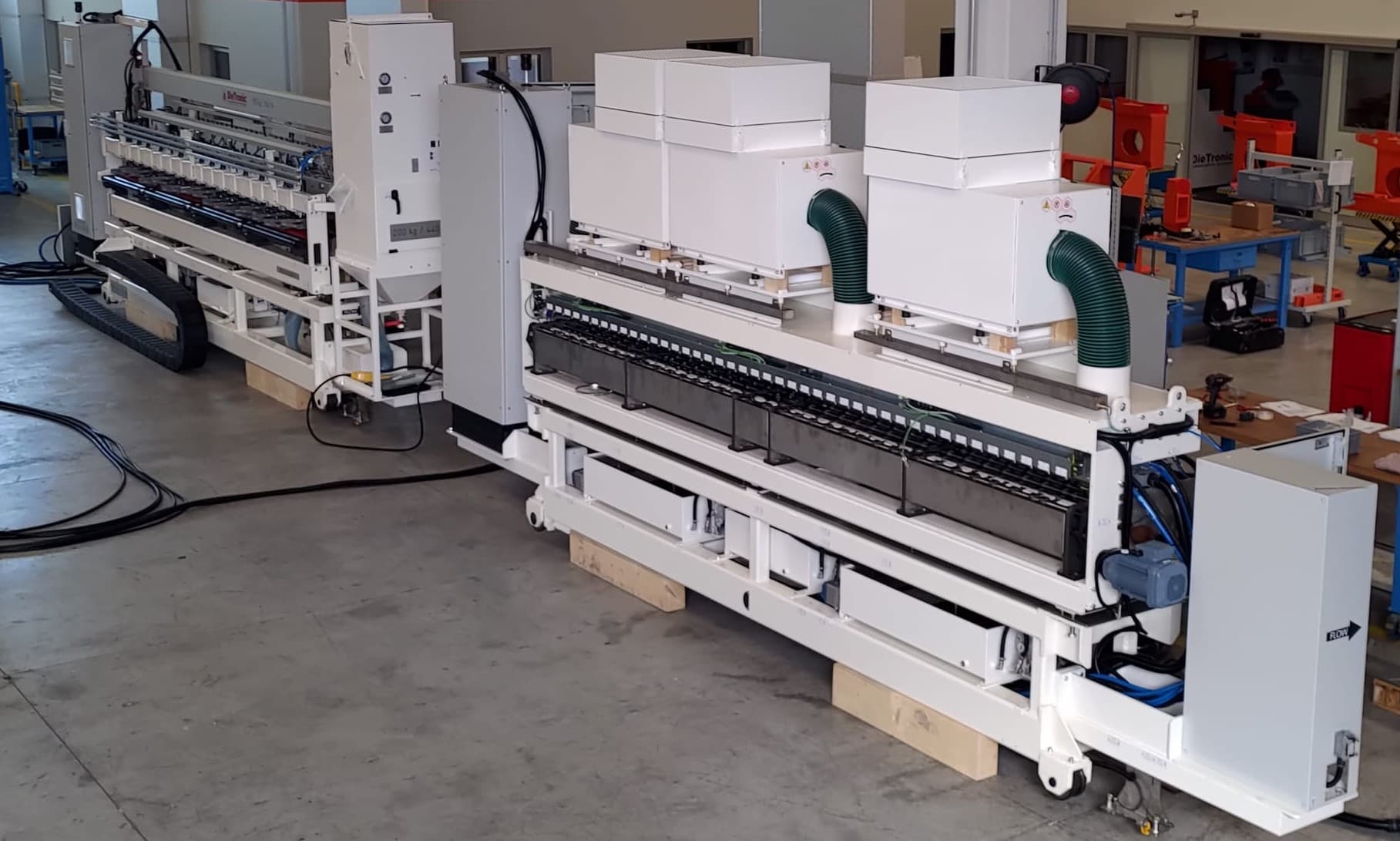
Lubrication is often treated as a fixed cost item, almost an unchangeable element of the process. Yet this is where one of the most underestimated efficiency margins in the entire manufacturing chain lies. Adopting a structured approach to cost savings through lubrication – via automatic systems, controlled dosing, and targeted applications – can drastically reduce oil consumption, cut machine downtime, and extend the lifespan of dies. What may initially seem like a minor process detail directly affects plant competitiveness and the balance of the profit and loss statement.
The Hidden Costs of Ineffective Lubrication
When discussing industrial maintenance, lubricant costs are often calculated only in their direct component: price per liter, estimated monthly consumption, supplier cost. The real expense, however, lies elsewhere – and rarely appears explicitly in production reports.
A manual or poorly calibrated lubrication system generates waste that is hard to quantify but easy to experience. Excess application contaminates the work environment, creates adhesion issues on finished surfaces, and introduces contaminants into the production cycle. Insufficient application, on the other hand, accelerates die wear, produces surface defects on processed parts, and in the most severe cases leads to press stoppages or irreversible tool damage.
Unplanned downtime adds further weight, representing one of the most significant cost factors in any facility. Every unexpected stop brings direct costs – idle labor, lost production, technical intervention – and indirect costs linked to delivery delays, non-conformity management, and pressure on inventory buffers. In many progressive stamping plants, a single machine stoppage caused by inadequate lubrication can cost several thousand euros in just one day.
Premature tool wear is another critical aspect. Precision forming dies require substantial investment: when lubrication is not uniform and repeatable, their average lifespan decreases measurably, with direct consequences on corrective maintenance budgets. Added to this are the costs of rework, scrap, and quality checks on out-of-spec parts – a cascade of inefficiencies often originating from variability in the lubricant film.
Lubrication Cost Savings: From Manual to Automatic Systems
Switching from manual to automatic lubrication is not just a matter of operational convenience, but a decision that reshapes production costs in a structured and measurable way.
With manual systems, the amount of lubricant applied depends on the operator – their experience, attention during the shift, and working conditions. This leads to inherent variability that no standard operating procedure can fully eliminate. Too much oil in one area, too little in another – and every deviation from the optimal level translates into a cost.
An automatic lubrication unit removes this variable at its root. The system delivers the exact amount of lubricant to the right points at the right time, with a level of repeatability that human control cannot ensure. Management is handled via PLC with a touch-screen interface, allowing parameters (pressure, flow rate, timing) to be set and quickly adjusted when changing format or material, while saving recipes for each production run.
The cost benefits are measurable and documented: Dietronic systems, for example, report a reduction in lubricant consumption of over 80% compared to traditional manual applications. This figure alone justifies the investment in many production environments, yet it represents only part of the overall advantage. Additional benefits include reduced scrap, fewer die interventions, improved surface quality of finished parts, and a cleaner, safer working environment. As a result, non-conformity rates decrease and costs related to managing oily residues are reduced.
Where Automatic Lubrication Has the Greatest Impact
The economic impact of optimized lubrication varies depending on the application, but some sectors show particularly fast and measurable returns on investment.
- Automotive: stamping lines for structural components and body panels often operate across multiple shifts with tight dimensional tolerances. Any variation in lubrication immediately affects part quality, with consequences that spread across the entire supply chain. In many cases, process repeatability is not optional but a contractual requirement with OEMs.
- Home appliances: production speeds are high, and annual volumes reach millions of units. Even marginal savings per cycle – in terms of lubricant consumption or avoided defects – multiply into a significant item in the income statement.
- Aluminum processing: pre-lubrication cleaning plays a key role. Surface residues compromise lubricant film adhesion and cause defects during forming. The combination of cleaning and re-lubrication offered by automatic systems directly addresses this need, with an integrated approach that reduces the number of stations in the production layout and lowers scrap management costs.
- Deep drawing applications: continuity and uniformity of the lubricant film are essential to prevent material breakage and high-cost scrap. The ability to modulate lubrication intensity zone by zone allows the distribution profile to be adapted to part geometry and material thickness, reducing scrap rates even in the most critical operations.
If you operate in these sectors and are interested in investing in an advanced lubrication system, take a look at our Sagoma or Combi units. For detailed information or quotations, feel free to contact us at: sales@dietronic.eu