
The Evolution of Lubrication in Automotive Manufacturing
8 October 2025
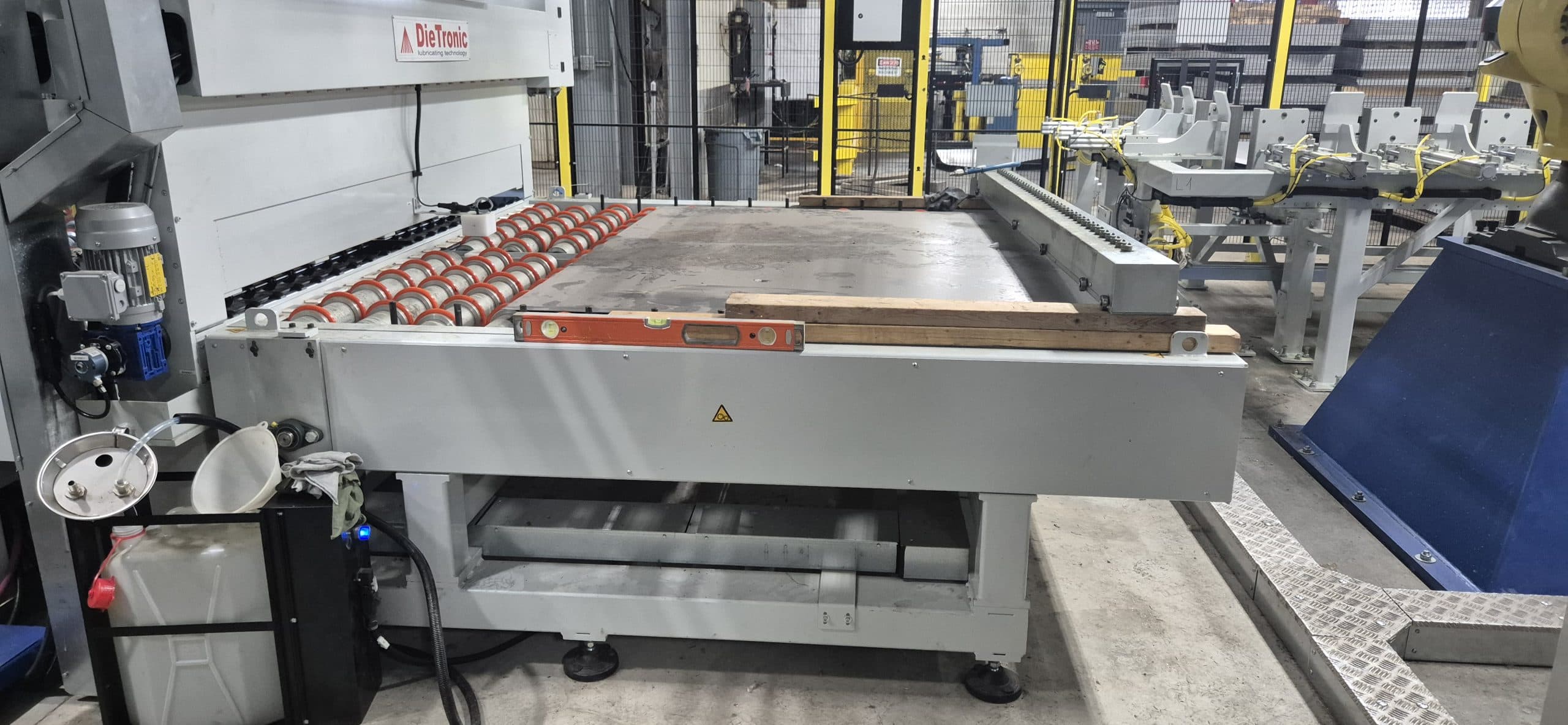
In automotive manufacturing, product quality and process repeatability depend on the efficiency of production lines. Every stage—from sheet metal processing to final assembly—requires machinery capable of operating with precision and consistency. Lubrication plays a crucial role in this context, helping to manage friction, heat, and mechanical stress generated during production. Proper lubricant application minimizes tool wear, improves surface finishing, and supports overall process stability. As automotive components become more complex, lubrication has evolved from a simple support task into an integral part of production strategy, directly influencing product quality and total operating costs.
Lubrication and Precision in Automotive Production Processes
Mechanical operations typical of the automotive industry – such as blanking, deep drawing, extrusion, or stamping – create high loads on contact surfaces. Under these conditions, the lubricant film acts as a protective barrier, limiting wear and material deformation. Uniform lubrication helps maintain dimensional stability and ensures tight tolerances, which are essential for components used in engines, suspensions, and transmissions.
In addition, a well-calibrated lubrication setup also affects cycle times and production consistency by reducing tool changes and corrective maintenance. This is especially relevant in automated lines, where even minimal friction variations can disrupt synchronization between robots and presses. Lubricant management therefore becomes a technical parameter that requires the same level of monitoring as temperature, speed, or working pressure.
Modern Lubrication Techniques in Automotive Manufacturing
Lubrication technologies have evolved to meet the growing demand for precision and sustainability in automotive manufacturing. Spray lubrication systems, in particular, allow for the application of minimal oil quantities only where needed, drastically reducing waste and contamination. Unlike traditional methods, controlled spraying ensures even distribution across complex or contoured surfaces.
The most advanced systems integrate monitoring sensors and management software that automatically adjust pressure and flow rate according to the specific operation. This automation allows the lubricant flow to adapt to each production phase, improving repeatability and traceability of process parameters. Some production plants also use eco-friendly lubricants designed to minimize residue and simplify cleaning at the end of each cycle.
Among these advanced solutions, Dietronic’s Sagoma unit stands out as a concrete example of precision lubrication: it enables targeted oil application on areas as small as 50×50 mm, maintaining consistent and controlled output—ideal for small components or intricate geometries.
Efficiency, Sustainability, and Cost Control
Optimized lubrication in automotive manufacturing delivers benefits that go far beyond friction reduction. From an economic standpoint, it extends tool life, decreases downtime, and lowers total oil consumption. Environmentally, it reduces emissions and simplifies disposal operations.
The evolution of spray systems, combined with high-performance lubricants, makes it possible to balance productivity and sustainability. Companies adopting these solutions achieve lower energy costs and cleaner working environments—key factors in modern industrial efficiency strategies.
Some of the main benefits of optimized lubrication include:
- Decreased wear on contact surfaces
- Improved dimensional stability of finished components
- Lower lubricant and energy consumption
- Enhanced environmental conditions along production lines
A Technological Lever for Industry Competitiveness
Lubrication in automotive manufacturing has become a strategic technological lever for improving performance, quality, and sustainability. Next-generation systems enable consistent and controlled oil distribution that adapts to the high production rates of the sector. The adoption of intelligent lubricant management systems leads to more accurate process control and measurable reductions in operating costs.
In an industrial context increasingly driven by automation and digitalization, lubrication is no longer a marginal element – it is a key component of an efficient, sustainable, and competitive production system.