
Fine Spraying: When It Makes the Difference in Metal Forming
13 May 2026
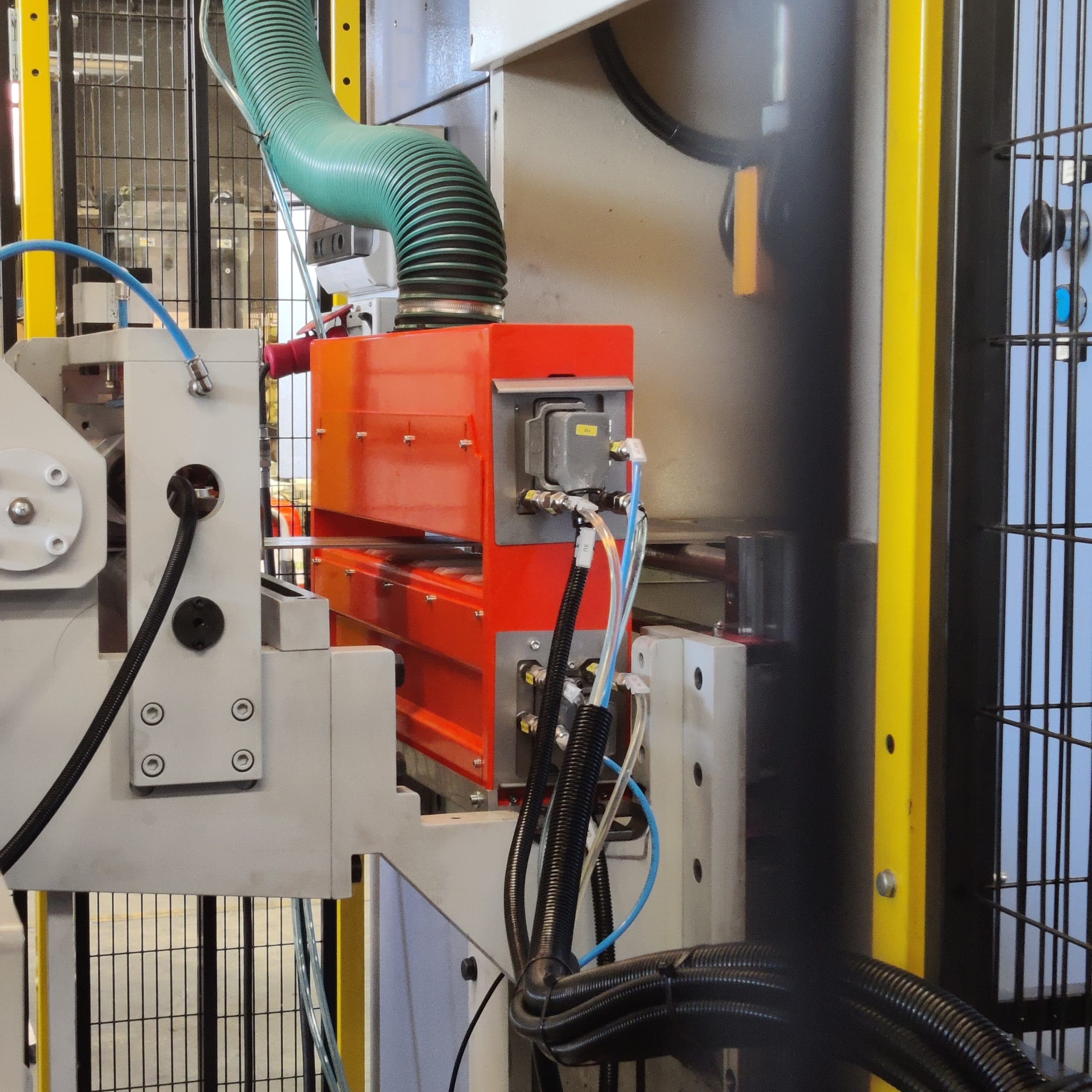
Fine spraying is one of those process parameters that goes unnoticed as long as everything works properly. The problem becomes evident when something goes wrong: recurring scratches on the sheet metal with no apparent cause, faster-than-expected die wear, or increasing scrap rates even though no process variable seems to justify them. In many of these cases, the root of the issue lies neither in the equipment nor in the material, but in the quality of the lubricant film applied to the coil – and especially in its uniformity.
Fine Spraying in Metalworking: What It Is
In industrial lubrication for metal forming, several methods are used to apply fluid onto sheet metal: rollers, brushes, high-flow shower systems, and spray systems. Fine spraying belongs to the latter category and stands out because of the size of the droplets it produces. Instead of releasing continuous jets or large droplets that accumulate in localized areas, a fine spraying system atomizes the lubricant into very small particles distributed evenly across the entire surface of the coil or sheet metal.
The difference is not only quantitative. Smaller droplets cover the surface more uniformly, penetrate complex geometries more effectively, and create a thin yet continuous film – exactly what is needed in processes such as progressive stamping or deep drawing, where the pressure between punch and die requires perfectly lubricated contact across the entire surface. A roller system, even when highly precise in the amount delivered, works through direct contact and is affected by variations in sheet flatness; a coarse spraying system, on the other hand, tends to create accumulations in the central areas while leaving the outer edges of the coil less covered.
Fine spray lubrication, when properly configured, combines quantity control with distribution quality: not only the right amount of fluid, but the right amount in the right place. A large part of both finished part quality and tool lifespan depends on this balance.
Variables that Determine the Quality of the Lubricant Film
Achieving uniform lubricant distribution through fine spraying does not depend on a single parameter, but on the balance between multiple variables interacting with one another. Adjusting only one while ignoring the others almost always leads to unstable or unsatisfactory results.
- Delivery pressure is the most direct variable: it determines the force with which the fluid passes through the nozzle orifice and breaks into droplets. Pressure that is too low produces large droplets and uneven coverage, while excessive pressure atomizes the fluid into particles so fine that they disperse into the air before reaching the surface, creating oil mist and waste. The optimal value varies according to the lubricant used and operating conditions.
- Fluid viscosity interacts directly with pressure: a high-viscosity lubricant requires greater pressure for proper atomization, while a fluid that is too thin tends to over-nebulize under the same pressure. Ambient temperature also affects viscosity significantly – a fluid performing correctly at 20°C may become denser and more difficult to atomize in an unheated plant during winter, directly impacting spray quality.
- Nozzle geometry includes spray cone angle, orifice diameter, and atomization type (air-assisted or airless), determining the shape and width of the area covered by each nozzle. Nozzle positioning relative to the coil surface, both in terms of distance and spray angle, completes the setup.
- Sheet metal feed speed also plays a key role. At higher speeds, the exposure time of each surface point to the spray is reduced, so the system must compensate by increasing flow rate or the number of active nozzles to maintain full coverage.
Managing all these variables manually in a stable and repeatable way is objectively difficult, especially when format, material, or lubricant change. Operator-related variability – inevitable in any manual system – directly translates into variability in the lubricant film, and therefore in the final product.
Non-Uniform Distribution: Effects on the Process and Part Quality
The consequences of poorly adjusted fine spraying do not always appear immediately or visibly. Some issues emerge gradually, while others occur intermittently and are difficult to trace back to their real cause – which makes them particularly challenging during root cause analysis.
The clearest sign is the appearance of scratches and marks on the sheet metal during stamping. This happens when part of the coil reaches the die with insufficient or no lubricant: metal-to-metal friction creates micro-scratches that remain visible on the finished part. In applications where surface finish is critical (automotive, household appliances or metal packaging) these defects directly result in scrap or rework.
Less visible, but equally costly, is the effect on die wear. A discontinuous lubricant film causes some areas of the die to operate under much higher friction conditions than others, resulting in asymmetric and accelerated wear. Over time, this alters die tolerances and brings maintenance or replacement costs forward. In high-volume production lines, even a 10–15% reduction in tool lifespan has a measurable impact on operating costs.
Localized excess lubricant creates the opposite type of problem, but with equally significant consequences: excessive oily residues interfere with downstream processes such as painting, welding, or bonding, causing adhesion issues and requiring additional cleaning operations. In areas where fluid accumulates and disperses into the air, oil mist forms, degrading the work environment and, in certain cases, creating risks for operators.
An additional complication is that these effects do not always occur consistently. They may appear intermittently depending on line speed, work shift, or seasonal conditions. This inconsistency often leads manufacturers to search for the cause in unrelated process variables, increasing diagnostic time and the overall cost of non-conformities.
Fine Spraying Control and Automation: How the Promax System Works
When discussing fine spraying, the difference between mediocre and excellent results almost always lies in the ability to control all the variables described above in a stable and repeatable way. No manual system, no matter how carefully managed, can guarantee this level of consistency: too many parameters depend on the operator, shift conditions, and raw material variability.
Dietronic’s Promax system addresses the issue with an approach designed around repeatability. The enclosed spray box – available in different sizes for coil widths from 200 to 800 mm – contains the nozzles within a fixed and controlled geometry, eliminating lubricant dispersion into the surrounding environment and ensuring that every point of the coil surface receives the same amount of fluid, regardless of operator or shift. Nozzle positioning can be configured according to coil width and process characteristics, with the possibility of activating up to 16 nozzles across 4 separate manifolds. This flexibility allows lubricant distribution to adapt to the specific geometry of each production setup.
The system is managed through a programmable PLC with a touchscreen interface: pressure, flow rate, duration, and frequency of spray cycles can all be set and stored for each production recipe. Changing format or material simply means recalling a saved recipe rather than manually recalibrating the system. This level of control leads to lubricant consumption reductions of more than 80% compared to traditional manual application – not because less fluid is applied overall, but because exactly the required amount is applied where needed, without waste or excess.
Completing the solution, the integrated oil mist extraction system eliminates one of the main environmental issues associated with uncontrolled fine spraying, improving workplace conditions and reducing residue disposal costs.
To learn more about the technical features of the Promax system or evaluate the most suitable configuration for your production line, visit the dedicated page or contact the Dietronic team directly at sales@dietronic.eu