
Extending Tool Life with Automatic Lubrication
13 November 2025
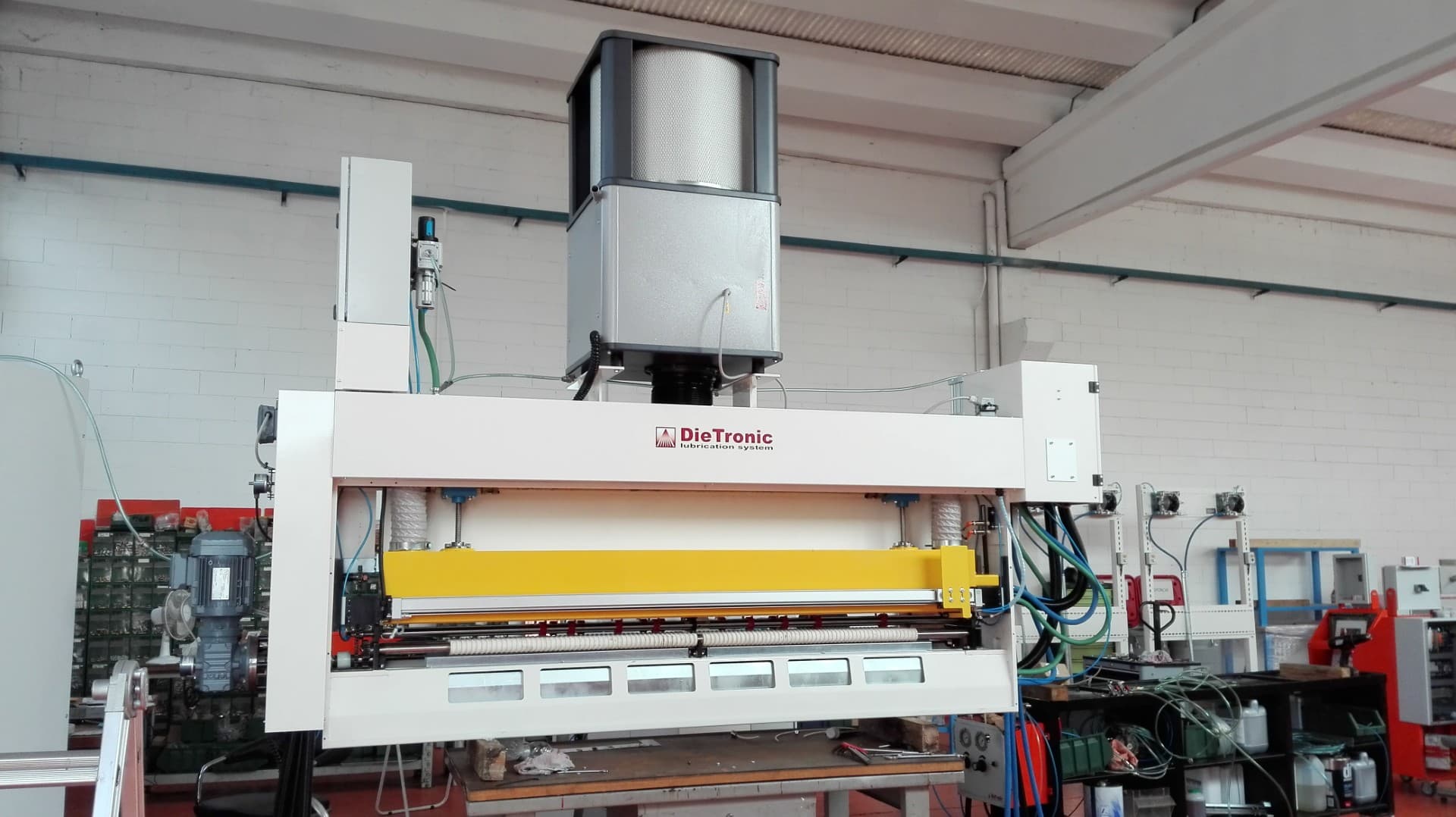
The ability to maintain a stable and continuous process depends on many factors, but one in particular has a direct impact on overall efficiency: tool life. Extending the service life of tools not only saves on replacement costs but also improves production predictability and reduces line downtime.
Every action aimed at reducing wear or optimizing contact between tool and material generates benefits on multiple levels: energy, economic, and environmental. At the same time, the evolution of industrial lubrication technologies has opened new possibilities for control and precision, allowing a shift from empirical approaches to automatic systems operating with predictive logic.
Lubrication and Tool Life: A Direct Link
During stamping and forming processes, tools are subjected to high mechanical and thermal stresses. Each contact cycle with the material generates friction and heat – two phenomena that, if not properly managed, accelerate surface wear exponentially. Lubrication is designed to interrupt this chain of deterioration by forming a protective film that reduces the friction coefficient, stabilizes temperature, and preserves the geometric integrity of the tool.
An incorrect application of lubricant can compromise these balances. Excessive fluid may accumulate in die cavities or create unwanted residues, while insufficient lubrication leaves areas exposed, leading to micro-abrasions and surface cracks. Both conditions drastically shorten tool life and require premature maintenance interventions.
To achieve optimal results, a lubrication system must adapt to parameters such as oil viscosity, contact pressure, material type, and processing speed. The choice of the right fluid and its precise distribution directly affect process stability and the quality of the finished product. When these elements are properly controlled, tool wear decreases, production cycles become more consistent, and maintenance costs are significantly reduced.
Process Efficiency and Lubrication Control
Production efficiency increasingly depends on the ability to control every variable in the process — and lubrication is one of the most decisive. A well-calibrated oil spraying system not only reduces friction but also ensures uniform application, minimizes waste, and maintains consistent conditions from one cycle to the next. This results in repeatable part quality and fewer unplanned stoppages due to anomalies or maintenance issues.
In modern automatic lubrication systems, fluid delivery is controlled by sensors and precision valves that dose the oil based on strip speed, sheet geometry, and process characteristics. This approach eliminates the uncertainties of manual methods and allows an ideal balance between protection and line cleanliness. The oil is distributed precisely where needed, without excess, reducing the risk of contamination and residue buildup.
From an economic standpoint, controlling oil spraying brings measurable advantages:
- Lower lubricant consumption
- Reduced tool replacements
- Fewer rejects
- Increased overall productivity
In a context where reducing tool wear is a priority, intelligent lubrication is confirmed as an essential strategy to extend component life and make the process more sustainable.
The Dietronic Approach: Extending Tool Life with Sagoma
Among the solutions designed to extend tool life, Dietronic offers Sagoma, an automatic lubrication unit engineered for maximum precision and flexibility in industrial applications. Sagoma allows extremely accurate control of the fluid quantity distributed across the strip or sheet surface, adjusting in real time to material geometry and operating conditions. This high level of control ensures uniform lubrication even in complex processes, minimizing localized friction and significantly prolonging tool life.
Implementing systems like Sagoma delivers concrete benefits: lower oil consumption, a cleaner production line, elimination of residues, and improved surface quality of the finished part. The automatic adjustment of flow rates also helps optimize production time and reduce maintenance activities, increasing the effective availability of the plant.
With its compact design and intuitive interface, Sagoma integrates easily into both new and existing lines, making lubrication not only more efficient but also more sustainable. This reflects Dietronic’s philosophy: combining innovation and reliability to deliver solutions that enhance production performance and extend tool life at every stage of the process.
For more details about the Sagoma unit, visit our website. For specific inquiries, don’t hesitate to contact us at sales@dietronic.eu