
Combi Dietronic: Efficiency in Sheet Metal Processing
14 January 2026
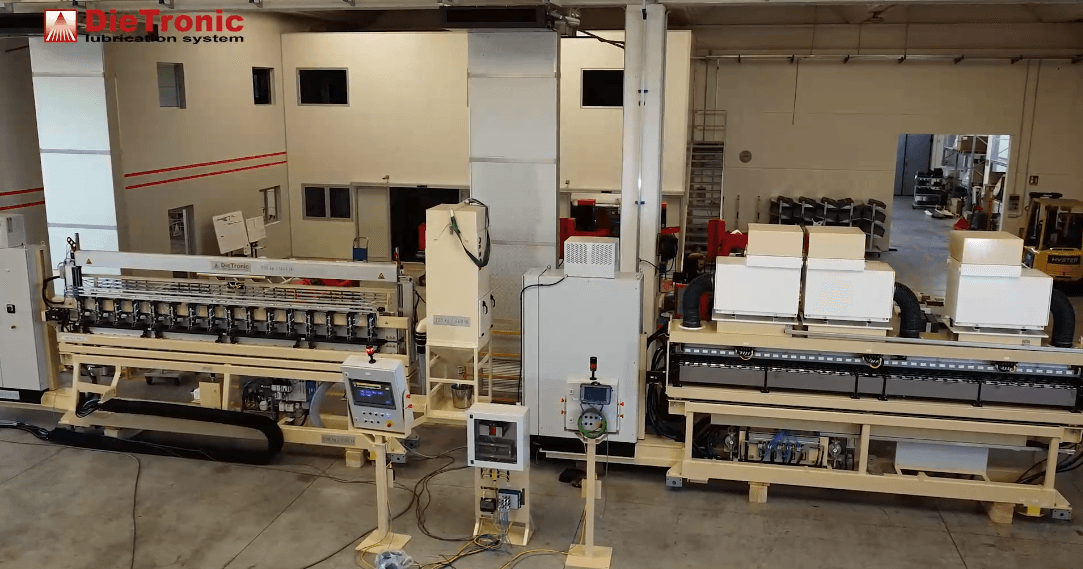
Surface residues, contamination, and poorly calibrated lubrication can compromise production repeatability, leading to scrap, downtime, and variations that are difficult to manage over time. The Combi system by Dietronic was developed to address this need with an integrated approach, combining sheet metal cleaning and lubrication within a single unit.
Combi Dietronic: integrated control of the sheet metal surface
The added value of the Combi system lies in its ability to provide more stable control of the material surface before it enters the press, simultaneously removing contaminants and unwanted deposits while preparing the sheet for a more consistent and targeted lubricant application. Compared with traditional solutions, where cleaning is carried out upstream and lubrication is applied generically over the surface, Combi helps reduce process variability, with a positive impact on set-up times and repeatability between different production batches. This type of system is particularly suitable for industries where surface refinement is a strict requirement for components destined for subsequent processing and finishing stages.
Integration therefore delivers not only an operational advantage, but also a significant lever for those managing high-performance production plants, especially where precision and consistency between parts must be ensured cycle after cycle. Reducing sources of error and improving process uniformity also contributes to lower scrap rates and reduced machine downtime, critical factors in achieving long-term production efficiency and competitiveness.
Linear brushes and controlled residue removal
A key element of the Combi system is its cleaning technology based on motorized linear brushes with transverse movement relative to the sheet metal feed direction. This controlled mechanism allows precise interaction with the surface, adapting to the inevitable irregularities present in metallic materials. The transverse movement, combined with an air-bearing support, ensures uniform contact between the brushes and the sheet, compensating for waviness and maintaining consistent cleaning pressure.
Residue removal is further managed through an integrated self-cleaning and extraction system, which removes eliminated material from the surface without interfering with production flow. This ensures operational continuity and prevents build-up that could compromise both cleaning effectiveness and smooth material advancement through the line. In high-speed plants, where residue management is a critical factor, the ability to extract and remove particles contributes to a safer working environment and reduces routine maintenance time.
When the system is used on materials such as aluminum or stainless steel, the cleaning technology can be combined with the application of a patented antistatic cleaning fluid. The result is a consistently high level of deep cleaning, with a significant reduction in unwanted particles and improved surface consistency required for high-precision stamping processes.
Combi sector-based spray lubrication
Another key feature of the Combi system is sector-based spray lubrication, designed to provide extremely precise control over lubricant application on the sheet metal surface. Unlike traditional continuous spray or roller systems, this solution distributes lubricant only in the areas actually involved in deformation processes, with granularity down to minimum areas of 100 × 100 mm. This level of selectivity allows the lubricant film to be tailored to real process requirements, avoiding unnecessary uniform application and improving overall consumption management.
At the core of the technology are modular manifolds, designed to provide flexibility and scalability even in complex production lines. Each manifold integrates four spray nozzles, each independently controlled. This modular configuration makes it possible to set up lubricant distribution according to part geometry and expected deformation loads, while maintaining high repeatability even as operating conditions change.
Each nozzle is equipped with a controlled temperature maintenance system, a key factor in preserving lubricant viscosity and ensuring stable atomization over time. Dosing is managed by high-frequency electric valves, allowing fast and precise adjustments, while patented per-nozzle flow control enables accurate monitoring and regulation of the applied lubricant quantity.
Industrial applications in sheet metal processing lines
The Combi system is adopted in various industrial contexts where control of the sheet metal surface directly affects finished product quality and production process stability. The combination of cleaning and lubrication in a single technical solution addresses different requirements typical of lines characterized by high speeds, tight tolerances, and strict quality standards.
In particular, it is used in the following industrial sectors:
- Automotive body panel production, where surface quality must remain consistent to support subsequent stamping and painting stages, reducing the risk of visual defects and rework.
- Household appliance component manufacturing, where a wide variety of formats and thicknesses requires flexible and repeatable sheet metal treatment.
- Coil lines, where controlled cleaning helps remove residues accumulated along the material path, with particular attention to protecting straightening rolls and maintaining process continuity.
- Blanking lines, where the system supports both the quality of the blanked part and the cleanliness of transport components, promoting greater operational stability and reduced maintenance interventions.
In all these contexts, Combi positions itself as a solution focused on process control rather than on a single technological step. This approach allows the sheet metal surface to be managed as a controllable process variable, contributing to greater predictability of line performance and a reduction in long-term operational issues.o.