
Choosing the Best Lubrication System: A Practical Guide
6 July 2026
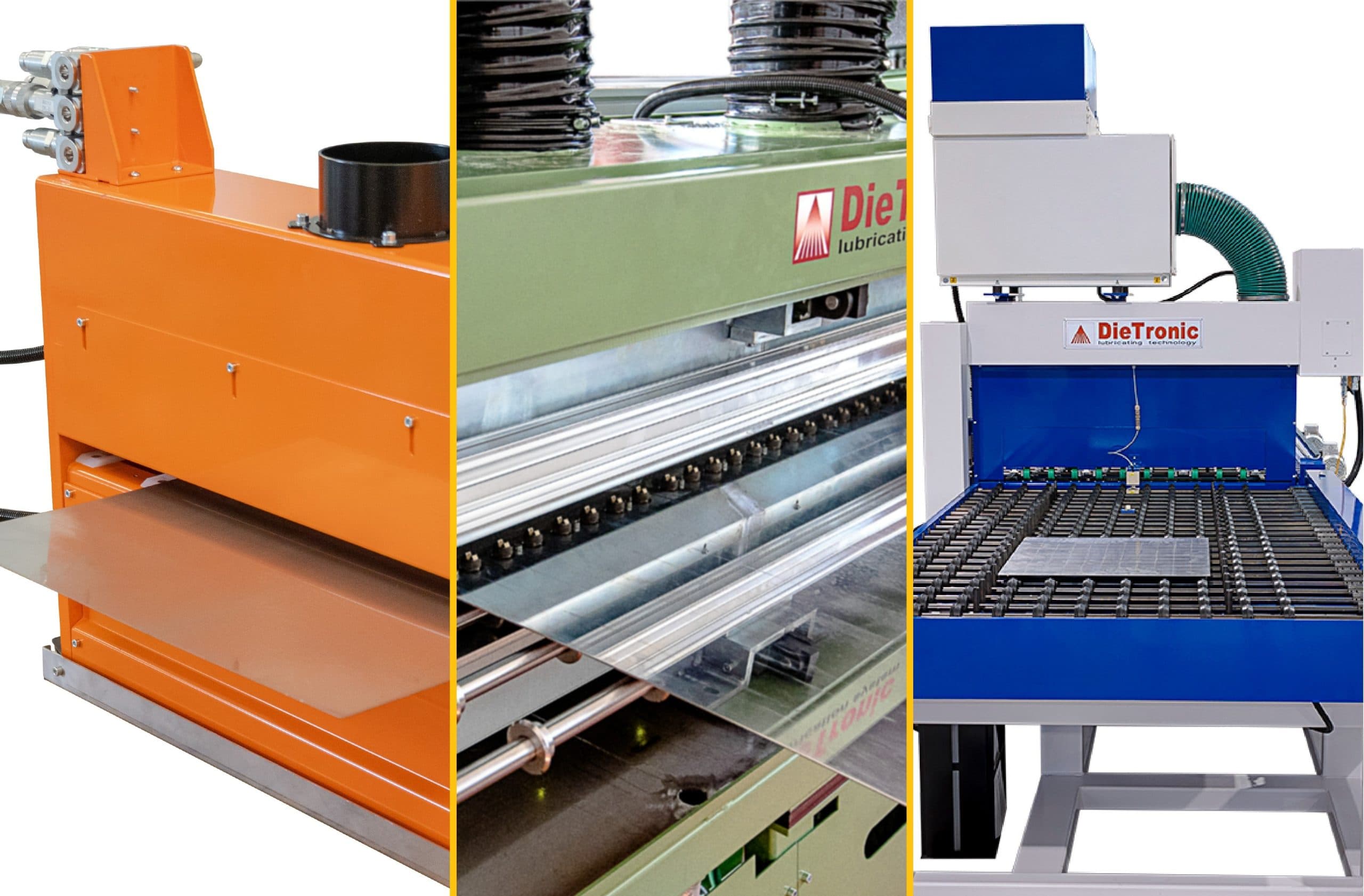
Identifying the best lubrication system means comparing specific technical characteristics rather than relying on a single criterion such as price or the most well-known brand on the market. There is no universally “best” system; there is, however, the one that best suits a particular production process, the material being processed, and the required production volumes.
Compatibility with the manufacturing process, dosing accuracy, level of automation, impact on consumption, ease of maintenance, and effect on the working environment are the variables that determine whether a solution truly meets the needs of a production line or, over time, leads to scrap, machine downtime, and unexpected costs.
Compatibility Between the Production Process and the Lubrication System
The starting point is the type of manufacturing process involved. Cold stamping, deep drawing, strip forming, and roller processing each involve different geometries, operating speeds, and friction points.
Deep drawing, for example, concentrates stress on large curved surfaces, whereas metal strip processing requires uniform coverage across the entire width of the strip, maintaining consistent application as the material moves through the line.
The type of material being processed also changes the lubrication requirements. High-strength steels, lightweight alloys, and galvanized sheets respond differently to the lubricating film, with variations in viscosity requirements and optimal application temperature.
For in-line metal strip processing, solutions specifically designed for this configuration are available, such as Promax, developed to adapt to the geometry of the strip rather than to an individual component.
Selecting a lubrication system without considering the specific characteristics of the production cycle is one of the most common evaluation mistakes. A solution designed for one application rarely delivers the same performance when transferred to a process with different operating conditions.
Point-by-Point Dosing Accuracy
The amount of lubricant applied directly affects two opposite outcomes:
- Insufficient dosing increases friction and the risk of surface defects.
- Excessive dosing leads to waste, slippery surfaces, and more frequent cleaning requirements.
More advanced systems regulate the delivered volume nozzle by nozzle, allowing different application rates for areas subjected to higher friction and those requiring lighter lubrication.
This level of precision has a direct impact on the surface quality of the finished product. Uneven distribution creates over-lubricated areas alongside insufficiently protected ones, increasing the risk of localized defects that can be difficult to detect during production.
Lubricant temperature also plays a critical role, since uncontrolled fluctuations affect viscosity and, consequently, the lubricant’s ability to form a uniform protective film.
Systems equipped with sensors that monitor the operation of each individual nozzle can detect faulty delivery before it results in damaged surfaces.
Automation and Production Continuity
Automation introduces a factor that goes beyond the precision of individual nozzles: the ability to maintain identical lubrication performance throughout every production cycle, regardless of shift changes or operator involvement.
A manual system depends on the experience and judgment of the operator, leading to inevitable variations over time. An automated system removes this variable by applying the same conditions to every part.
For production lines that include surface cleaning before lubrication, integrating both stages into a single automated system further reduces the variability associated with separate manual operations.
This is the principle behind Combi, designed to manage both cleaning and lubrication in one continuous process.
The appropriate level of automation depends primarily on production volume. High-output lines benefit the most from automated control, while lower-volume operations may opt for intermediate solutions based on the balance between investment and expected return.
Lubricant Costs and Environmental Sustainability
One factor often overlooked during system selection is the economic and environmental impact of the lubricant itself, considered as a separate cost rather than simply the consequence of other technical factors.
Less controlled systems generally consume more lubricant, not only because of imprecise application but also because operators often apply more than necessary as a safety margin, preferring additional cost over the risk of production defects.
Reducing lubricant consumption delivers two key benefits:
- Lower purchasing and disposal costs.
- Reduced overall environmental impact, an increasingly important consideration in purchasing decisions within the manufacturing sector.
Evaluating this criterion separately from the others makes it easier to calculate the overall financial return of a new system by distinguishing savings generated through reduced lubricant consumption from those achieved through lower scrap rates.
Maintenance and Long-Term Diagnostics
Even a system that performs well when first installed can generate hidden costs if maintenance is complicated.
Ease of access to internal components, spare parts availability, and the simplicity of cleaning or adjusting nozzles without lengthy production interruptions all influence long-term operating costs.
In demanding industrial environments where dust and metal residues are constantly present, the durability of system components determines how long the equipment maintains its original performance without frequent corrective maintenance.
Systems equipped with self-diagnostic functions that automatically detect efficiency losses at specific dispensing points allow maintenance to be planned proactively instead of reacting only after defects appear in finished products.
This predictive capability makes maintenance scheduling more reliable while reducing the frequency of unexpected downtime caused by sudden failures.
Safety and Workplace Management
The final criterion concerns the impact of the lubrication system on the physical working environment, independently of product quality or operating costs.
Poorly controlled lubricant application creates slippery surfaces, oily residue on floors and equipment, and increased operator exposure to potentially irritating substances.
For applications requiring lubricant to be applied only to specific geometric areas while minimizing overspray into the surrounding workspace, dedicated solutions such as Sagoma provide highly accurate application control.
A cleaner, more organized working environment reduces slipping hazards, simplifies visual inspections along the production line, and helps maintain consistent safety standards over time without relying on additional manual checks.
Choosing the Best Lubrication System
Selecting the most suitable lubrication system involves much more than comparing purchase prices.
Process compatibility, dosing accuracy, level of automation, lubricant consumption, ease of maintenance, and impact on the working environment represent six distinct evaluation criteria, each capable of influencing the real value of an investment over the medium and long term.
Assessing these factors individually, rather than treating them as a single consideration, makes it easier to identify where the greatest opportunities for improvement exist within a production line.
A preliminary evaluation based on the specific characteristics of the manufacturing process remains the strongest foundation for making an informed decision.
To learn more about the available solutions or request a technical assessment, contact the Dietronic team at sales@dietronic.eu.